
Key Takeaways
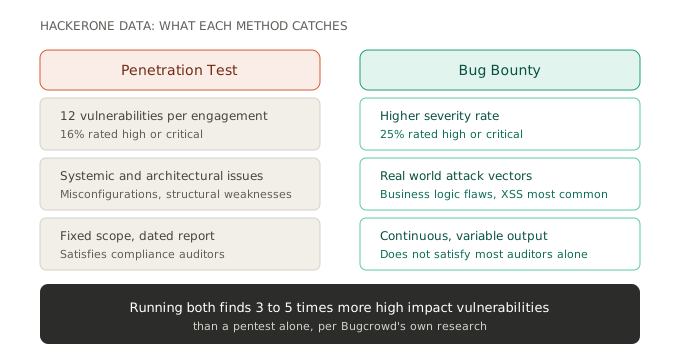
- HackerOne’s own data shows the average pentest surfaces 12 vulnerabilities with 16 percent rated high or critical, while bug bounty programs average a higher 25 percent high or critical rate.
- Pentests tend to surface more systemic and architectural issues, like misconfigurations, while bug bounty researchers tend to find more real world attack vectors and business logic flaws.
- Bugcrowd’s own research found organizations running both a pentest and a bug bounty program together find 3 to 5 times more high impact vulnerabilities than pentest alone.
- A bug bounty report does not satisfy most compliance auditors on its own, SOC 2 Type 2, PCI DSS, and ISO 27001 vendor questionnaires generally require the structured, fixed scope report a pentest produces.
- The two are complementary, not competing, and the combined annual cost for a mid sized company typically stays under 150,000 dollars.
Bug bounty vs penetration testing gets framed as a choice more often than the data actually supports. HackerOne’s own reporting, drawn from over 580,000 validated vulnerabilities across their platform, shows the two methods consistently catch different things, and the strongest security programs tend to run both rather than pick one.
What Each Method Actually Catches
HackerOne’s own Hacker-Powered Security Report puts real numbers behind a distinction that is usually argued anecdotally. This HackerOne vulnerability data, drawn from over 580,000 validated reports on their platform, shows the average pentest surfaces 12 vulnerabilities per engagement, with 16 percent rated high or critical severity. Bug bounty programs report a higher severity rate, around 25 percent high or critical, but the finding pattern differs in kind, not just volume. Pentests tend to surface more systemic and architectural issues, misconfigurations and structural weaknesses that a time boxed, methodical review is well suited to find. Bug bounty researchers, working continuously and creatively against a live target, tend to surface more real world attack vectors and business logic flaws, with cross site scripting remaining the single most commonly reported weakness type.
Why Combining Both Beats Either Alone
Bugcrowd’s own research on organizations running both testing types found something worth taking seriously if you are choosing between them, combined programs find 3 to 5 times more high impact vulnerabilities than a pentest alone, and typically at a lower cost per finding once both are running. The two methods are structurally complementary. A pentest is time boxed with a defined scope and a dedicated team, producing a predictable, formatted deliverable. A bug bounty program is continuous and crowdsourced, generating variable output, some months producing dozens of valid reports, others producing very few, in exchange for ongoing coverage against new attack techniques as they emerge.
Trying to figure out whether your company is ready for a bug bounty program, or whether a pentest should come first? Book a scoping call and we will help you think through the sequencing.
Why Compliance Still Requires a Pentest Specifically
This is the part of bug bounty vs penetration testing that gets glossed over most often. Bug bounty compliance is a real gap, no matter how mature the program, it does not satisfy most compliance auditors on its own. SOC 2 Type 2, PCI DSS, and ISO 27001 vendor questionnaires are generally built around the fixed scope, dated, attested report format that a formal pentest produces, not the variable, ongoing output of a crowdsourced program. Our pentest report acceptance post covers what auditors and enterprise security teams actually check for in a report, and a bug bounty submission log typically does not meet that bar, regardless of how many real vulnerabilities it has surfaced.
For a growing SaaS company, this usually means the pentest is not optional even if a bug bounty program is already running. A combined pentest bug bounty program gives you both, the bug bounty adds ongoing coverage, the annual pentest is what satisfies the specific, dated evidence your auditor or enterprise buyer is actually asking for.
Frequently Asked Questions
Can a bug bounty program replace a penetration test for compliance purposes? Generally no. Most compliance frameworks expect the structured, fixed scope, dated report format a formal pentest produces. A bug bounty program’s ongoing, variable output typically does not satisfy that requirement on its own, even when it surfaces real, valid vulnerabilities.
Is bug bounty testing better than a pentest? Neither is objectively better, they surface different things. HackerOne’s own data shows pentests catch more systemic and architectural issues, while bug bounty programs tend to catch more real world attack vectors and business logic flaws at a somewhat higher severity rate.
How much does running both cost combined? Based on current market reporting, a mid sized company can expect to spend roughly 30,000 to 80,000 dollars annually on a pentest and 50,000 to 100,000 dollars on a private bug bounty program, keeping the combined total under 150,000 dollars a year in most cases.
If your compliance timeline needs a pentest that will actually satisfy your auditor’s requirements, bug bounty program or not, book a scoping call and we will walk through what your specific framework requires.
Packet33 is a penetration testing and compliance advisory firm serving SaaS and HealthTech startups in the US, Canada, and UK.

Mohamed is the founder of Packet33. He worked as a cybersecurity analyst before launching the firm and now leads an OSCP-certified team serving SaaS and HealthTech startups in the US, Canada, and UK.