
A pentest report from a boutique firm gets accepted or rejected based on what is actually in the report, not the size of the company that produced it. This is the question that quietly stalls a lot of founders right before they book a pentest, will an enterprise security team or an auditor take a pentest report from a boutique firm seriously if it did not come from a name they already recognize. The honest answer is that enterprise pentest report acceptance criteria are documented, specific, and have nothing to do with employee headcount.
What Auditors and Enterprise Security Teams Actually Check
Neither auditors nor enterprise procurement teams have a formal rule that says the testing firm must exceed a certain size. What they do check, consistently, is whether the report itself meets a specific bar.
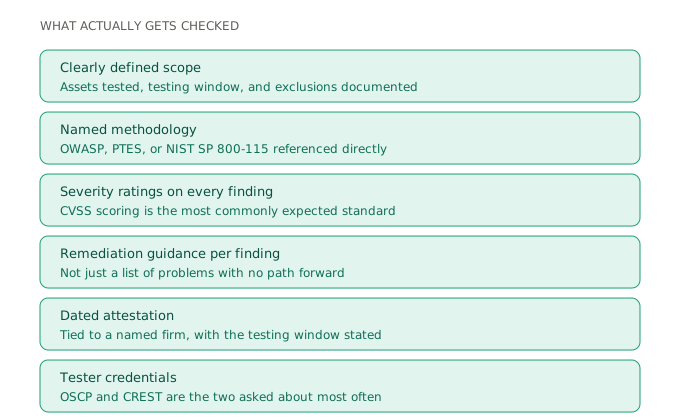
- A clearly defined scope. The exact assets tested, the testing window, and any explicit exclusions need to be documented, not implied.
- A named methodology. OWASP, PTES, or NIST SP 800-115 referenced directly, not just “we tested for vulnerabilities.”
- Severity ratings on every finding. CVSS scoring is the most commonly expected standard, and its absence is one of the fastest ways a report gets questioned.
- Remediation guidance per finding, not just a list of problems with no path forward.
- A dated attestation tying the report to a named firm, with the testing window clearly stated.
- Tester credentials. OSCP and CREST are the two credentials enterprise security teams most often ask about directly, and a report that names them proactively answers a question before it gets asked.
None of these criteria mention firm size. A two person boutique penetration testing company that documents all six items thoroughly will clear review faster than a large firm’s report that skips the attestation language or buries severity ratings in an appendix.
Where Firm Size Actually Does Matter
It would be dishonest to say size never factors in anywhere, so here is where it genuinely does.
Some enterprise procurement questionnaires ask for the testing firm’s insurance coverage, which any legitimate firm, boutique or not, should be able to provide. A small number of large enterprise buyers, particularly in finance or government adjacent industries, maintain approved vendor lists that favor firms with existing relationships or brand recognition, though this is the exception rather than the norm for a SaaS or HealthTech startup’s typical buyer. And a report riddled with generic, templated language that reads like it came from an automated scanner rather than a manual tester will raise questions regardless of firm size, this is a report quality issue that happens to correlate with cheap, high volume vendors more often than with boutique shops specifically.
If you want a second opinion on whether a pentest report you already have would hold up to enterprise or auditor scrutiny, book a scoping call and we will walk through what is missing before you send it anywhere.
What This Means for Choosing a Vendor
If acceptance depends on report quality rather than company size, the actual vendor decision becomes simpler than it looks. Ask any firm you are evaluating, boutique or enterprise, to walk you through exactly how their reports handle the six criteria above before you sign anything. An auditor accepted pentest report is built around those criteria long before it ever reaches an auditor’s desk, which means the real diligence happens at vendor selection, not after the report is delivered. A firm that hesitates to answer, or that cannot show you a sample report demonstrating these elements, is a real red flag regardless of how many employees they have.
This is also where knowing what to do once the report is in hand becomes just as important as the report itself. A well documented report from a boutique firm that you present clearly, with scope, methodology, and remediation status summarized upfront, will outperform a poorly presented report from a bigger name every time. Enterprise security teams are evaluating what you hand them, not doing a background check on the vendor’s logo.
If you are still comparing options at the vendor selection stage, our comparison of penetration testing companies for SaaS startups covers what actually differs between boutique and larger firms beyond the acceptance question specifically.
A pentest report from a boutique firm can hold up to the exact same scrutiny as one from a name brand, provided it is built around the criteria that actually get checked.
If you want a pentest report built to clear enterprise review and audit scrutiny on the first pass, book a scoping call and we will walk through exactly what your report needs to include.
Packet33 is a penetration testing and compliance advisory firm serving SaaS and HealthTech startups in the US, Canada, and UK

Mohamed is the founder of Packet33. He worked as a cybersecurity analyst before launching the firm and now leads an OSCP-certified team serving SaaS and HealthTech startups in the US, Canada, and UK.