
Key Takeaways
- HITRUST certification cost ranges from roughly 20,000 to 70,000 dollars for the entry level e1 assessment, 60,000 to 200,000 dollars for i1, and 100,000 dollars into the several hundred thousands for r2, the most rigorous tier.
- The total cost is made up of several separate line items, a HITRUST platform subscription, report review fees paid directly to HITRUST, external assessor fees, and often underestimated remediation work.
- HITRUST certification is a materially bigger investment than a standalone HIPAA risk assessment, the two are not interchangeable and get confused often.
- Most pre seed through Series A startups are not yet the target audience for HITRUST, it tends to become relevant once a specific enterprise health plan or PBM contract requires it by name.
HITRUST certification cost is one of the most consistently underestimated line items in HealthTech compliance budgeting, largely because it gets lumped in mentally with a HIPAA risk assessment when the two are very different scopes of work. A HIPAA risk assessment can run a few thousand to around twenty thousand dollars. HITRUST certification, even at its lightest tier, starts well above that and can run into six figures.
What HITRUST Actually Costs by Tier
HITRUST offers three assessment tiers, and the cost difference between them is significant, not incremental. HITRUST Alliance’s own pricing guidance confirms assessor fees vary by firm and scope, since HITRUST itself does not set third party assessor pricing.
| Tier | Controls | Validity | Typical all in cost |
|---|---|---|---|
| e1 (Essentials) | 44 | 1 year | 20,000 to 70,000 dollars |
| i1 (Implemented) | Approximately 182 | 1 year | 60,000 to 200,000 dollars |
| r2 (Risk-based) | 200 to 1,000+ | 2 years | 100,000 dollars to 300,000 dollars or more |
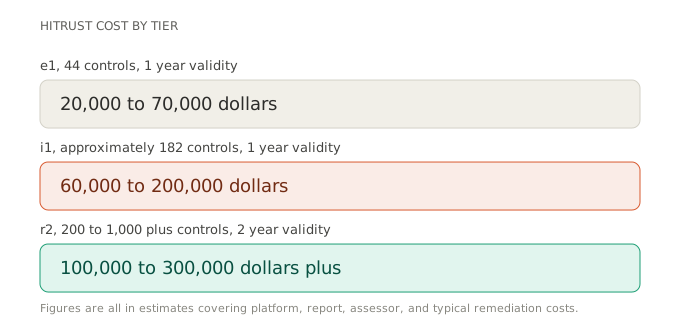
e1 is the entry point, designed for organizations that need a baseline HITRUST credential without the full risk based assessment. i1 sits in the middle and has become the most commonly required tier in health plan and hospital system vendor contracts. r2 is the original, most rigorous assessment, using full maturity scoring across hundreds of controls, and is typically reserved for larger organizations or those facing the most demanding contractual requirements. Comparing HITRUST e1 i1 r2 cost side by side like this makes clear the jump between tiers is a change in scope, not just a price adjustment.
What Makes Up the Total Cost
HITRUST certification cost is not a single fee, it is several separate costs that add up.
The MyCSF platform subscription, HITRUST’s assessment and reporting tool, typically runs from a few thousand dollars for short term access up into the tens of thousands annually depending on organization size. Report credits, paid directly to HITRUST Alliance to review and certify your final assessment, run roughly 6,000 dollars for e1, 7,000 for i1, and 8,000 to 9,000 for r2. External assessor fees, paid to an authorized third party assessor firm that performs the actual validated testing, are typically the largest single cost, often representing 25 to 60 percent of the total. Remediation work, closing the gaps the assessment surfaces before you can pass, is frequently the most underestimated cost of all, since it depends entirely on how mature your existing controls are before you start.
Not sure whether HITRUST is actually the right target for your company’s stage, or whether a HIPAA risk assessment covers what you need for now? Book a scoping call and we will help you figure out which one you actually need.
HITRUST vs HIPAA Risk Assessment: Not the Same Thing
This is where the confusion tends to start. A HIPAA risk assessment is a required, ongoing process under the HIPAA Security Rule, typically costing a few thousand to around twenty thousand dollars for a startup, and it is something almost every HealthTech company handling PHI needs regardless of size. HITRUST certification is a voluntary, much larger scale credential that a subset of companies pursue, usually because a specific enterprise customer, health plan, or PBM contract requires it by name. You do not need HITRUST to be HIPAA compliant, and being HIPAA compliant does not mean you are HITRUST certified. They solve different problems at very different price points.
Does a Startup Actually Need HITRUST?
For most companies at the pre seed through Series A stage, the honest answer is not yet. HITRUST assessment pricing, even at the e1 tier, is a significant budget commitment that rarely makes sense until a specific deal or contract explicitly requires it. The more common path is a HIPAA risk assessment and a HIPAA compliant penetration test to satisfy general compliance and enterprise security review expectations, then pursuing HITRUST later if and when a health plan or large enterprise partner names it as a hard requirement.
Frequently Asked Questions
What is the cheapest way to get HITRUST certified? The e1 assessment is the lowest cost and lowest control count tier, typically 20,000 to 70,000 dollars all in, and is designed specifically as an entry point for organizations that need a baseline HITRUST credential.
Is HITRUST certification the same as a HIPAA risk assessment? No. A HIPAA risk assessment is a required, ongoing process under the HIPAA Security Rule and costs far less. HITRUST is a voluntary, much more extensive certification that a smaller subset of companies pursue, usually driven by a specific customer or contract requirement.
Why does HITRUST cost so much more than other compliance frameworks? The cost reflects the depth of the assessment, hundreds of controls at the r2 tier, mandatory use of an authorized third party assessor, direct review fees paid to HITRUST Alliance, and typically substantial remediation work to close gaps before certification.
If you are trying to figure out whether HITRUST, a HIPAA risk assessment, or both make sense for your company right now, book a scoping call and we will walk through what your specific contracts actually require.
Packet33 is a penetration testing and compliance advisory firm serving SaaS and HealthTech startups in the US, Canada, and UK.

Mohamed is the founder of Packet33. He worked as a cybersecurity analyst before launching the firm and now leads an OSCP-certified team serving SaaS and HealthTech startups in the US, Canada, and UK.