
Key Takeaways
- Penetration testing cost for a HealthTech startup typically runs 12,000 to 30,000 dollars and beyond, running higher than a comparable non healthcare SaaS test because of PHI scope and stricter documentation expectations.
- The biggest cost driver is not company size, it is how much of your environment actually touches protected health information, since that scope needs deeper manual testing and cleaner evidence for auditors and partners.
- A HIPAA risk assessment is a separate deliverable from a penetration test, and bundling the two changes both the timeline and the price, so confirm which one you actually need before requesting quotes.
- Vendors unfamiliar with HIPAA specific reporting expectations often underquote, then require a second engagement once a health system partner or auditor rejects the report format.
Ask a HealthTech founder what a pentest should cost and most reach for the same number a SaaS peer quoted them. That number is usually too low. Penetration testing cost for a HealthTech startup runs higher than a comparable general SaaS engagement, and the reason is not company size, it is what happens the moment protected health information enters the picture.
Why HealthTech Pentests Cost More Than Standard SaaS Tests
A general SaaS penetration test and a HealthTech penetration test can look identical on paper, a web app, an API, a handful of user roles, and still land at very different price points. The difference comes down to scope depth. Once PHI is in the environment, testers need to trace exactly how that data flows through every endpoint, every role, and every third party integration, not just confirm that authentication works. That is a slower, more manual process than a standard SaaS test, and it shows up directly in the quote.
HealthTech Penetration Testing Cost by Scope
| Scope | Typical range | What usually drives it |
|---|---|---|
| Small platform, limited PHI exposure | 12,000 to 18,000 dollars | Single application, PHI touches a limited set of endpoints, one or two roles |
| Mid size platform, broad PHI access | 18,000 to 24,000 dollars | PHI accessible across multiple roles, larger API surface, third party data integrations |
| Complex or multi service environment | 24,000 to 30,000 dollars and beyond | Multiple services or applications handling PHI, cloud infrastructure review, retesting included |
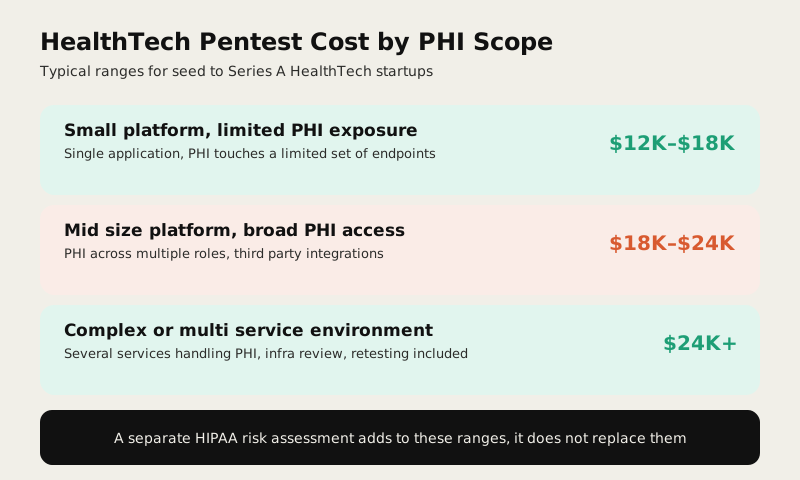
These ranges assume a standalone penetration test. A separate HIPAA risk assessment, covered below, adds to the total rather than replacing it.
Penetration Test or HIPAA Risk Assessment, and Do You Need Both
Is a penetration test the same as a HIPAA risk assessment? No. A penetration test looks for exploitable technical vulnerabilities in your application and infrastructure, while a HIPAA risk assessment evaluates administrative, physical, and technical safeguards against the HIPAA Security Rule. Most HealthTech startups eventually need both.
The confusion here costs founders real money. A HIPAA risk assessment is a broader compliance exercise, covering policies, access controls, and workforce training alongside technical safeguards, and it is priced and scoped separately from a penetration test. Health system partners and enterprise buyers frequently ask for both during due diligence, so confirming which one your specific request requires, before a vendor quotes you a number, prevents paying for the wrong deliverable or discovering mid negotiation that you need a second engagement.
What Actually Drives HealthTech Pentest Pricing Up
- PHI data flow complexity. The more paths PHI can travel through your system, patient facing app, provider portal, billing integration, the more manual tracing the engagement requires.
- Third party integrations. EHR connections, billing systems, and telehealth platforms each add scope, since data leaving your direct control still needs to be accounted for in the test.
- Business associate agreements in scope. If your platform processes PHI on behalf of a covered entity, testers often need to validate controls tied to your BAA obligations specifically, which adds time beyond a standard technical test.
- Report format expectations. Health system partners and HIPAA auditors frequently expect a report structured around the Security Rule’s technical safeguards, not just a generic vulnerability list, and vendors unfamiliar with that format spend extra time reformatting after the fact.
- Manual versus automated depth. HHS guidance on the HIPAA Security Rule expects a genuine risk based evaluation, and an automated scan alone cannot demonstrate that in a way regulators or partners accept.
Not sure how much of your environment actually touches PHI, or what that means for your number? Book a scoping call and we will walk through your data flow before quoting anything.
The Underquoting Trap
The most expensive mistake in this category is not overpaying, it is accepting a quote from a vendor who treated your HealthTech platform like a standard SaaS app. A test that skips proper PHI data flow tracing can pass without surfacing the exact issues a health system security review or a HIPAA auditor cares most about, which means the report gets rejected and the whole engagement has to be redone with a vendor who actually understands the framework. Confirming HIPAA specific experience, and asking to see a sample report before signing, is worth more than a lower number on the initial quote.
How We Approach HealthTech Pentest Pricing
We scope HealthTech engagements around actual PHI exposure, not headcount or generic app complexity, which is why our own HealthTech quotes have ranged from roughly 12,000 to 30,000 dollars and beyond depending on how much of the platform touches protected health information. A pre launch platform with limited PHI access and a multi service platform handling PHI across several integrations are not the same scoping conversation, and the price should reflect that.
FAQ
How much does a HIPAA penetration test cost for a startup? Most HealthTech startups pay between 10,000 and 25,000 dollars for a penetration test, with the exact number driven by how much of the platform touches protected health information rather than company size alone.
Do HealthTech startups need a penetration test before launch? Not always by regulation, but most health system partners, enterprise buyers, and cyber insurers now expect one before a platform handling PHI goes live, and building it into your launch timeline avoids a last minute scramble.
Is a penetration test required for HIPAA compliance? HIPAA does not currently name a mandatory penetration test in the Security Rule text, but a genuine risk analysis is required, and most organizations satisfy that expectation with a combination of a penetration test and a formal risk assessment. That is changing. HHS’s proposed 2025 update to the Security Rule would make annual penetration testing an explicit, required control rather than an addressable one, alongside vulnerability scanning every six months. The rule is not final yet, but HealthTech startups that build annual testing into their routine now will not be scrambling if it is.
Can the same vendor do both the pentest and the HIPAA risk assessment? Yes, and there is a real advantage to it, since a vendor already familiar with your environment from the technical test can move faster through the risk assessment rather than starting from zero.
If your platform touches PHI and you need a number tied to your actual data flow, book a scoping call, or start with our HIPAA penetration testing page for the full breakdown of what is included.
Packet33 is a penetration testing and compliance advisory firm serving SaaS and HealthTech startups in the US, Canada, and UK.

Mohamed is the founder of Packet33. He worked as a cybersecurity analyst before launching the firm and now leads an OSCP-certified team serving SaaS and HealthTech startups in the US, Canada, and UK.