
Key Takeaways
- SOC 2 penetration test cost for a typical seed to Series A SaaS company runs 8,000 to 20,000 dollars, with complex multi service environments running higher.
- SOC 2 itself does not name a required price. What drives cost is scope, timing against your audit window, and whether the auditor is asking for evidence beyond a scan report.
- Booking a pentest with enough runway before your audit window closes is the single biggest lever founders have over price, since rush timelines carry a premium.
- A vendor who cannot explain how your SOC 2 trust services criteria map to their test scope is a bigger risk than a slightly higher quote.
Ask a handful of vendors for a SOC 2 penetration test quote and you will get numbers that swing by tens of thousands of dollars for what sounds like the same request. Some of that spread is normal scope variance. A meaningful part of it, though, comes from something founders do not expect: SOC 2 penetration test cost is shaped as much by your audit timeline as by your application’s size.
What SOC 2 Actually Requires From a Pentest
SOC 2 does not specify a pentest methodology, a price, or even a mandatory annual cadence in the trust services criteria themselves. What most auditors expect in practice is a penetration test that covers the systems in your audit boundary, performed by an independent third party, close enough to your audit period that the findings and remediation are still current when the auditor reviews evidence. We covered how this differs from HIPAA’s testing expectations in our SOC 2 vs HIPAA pentest requirements comparison, since founders juggling both frameworks often assume one test satisfies both, and it usually does not without adjustment.
That flexibility is exactly why pricing looks inconsistent from the outside. Two companies with similar headcounts can get very different SOC 2 penetration test cost quotes because one has a tightly scoped single application in its audit boundary and the other has expanded its boundary to cover a second product line, an admin portal, and a partner facing API, all of which now need testing to satisfy the same audit.
SOC 2 Penetration Test Cost by Scope
| Scope | Typical range | What is usually included |
|---|---|---|
| Single web app plus API, one or two roles | 8,000 to 14,000 dollars | Core production application inside the audit boundary, standard OWASP coverage |
| Multi role SaaS with expanded audit boundary | 14,000 to 20,000 dollars | Role based access testing, larger API surface, systems added to boundary since last audit |
| Multi service or multi product environment | 20,000 to 30,000 dollars plus | Several applications or services in scope, cloud infrastructure review, retesting included |
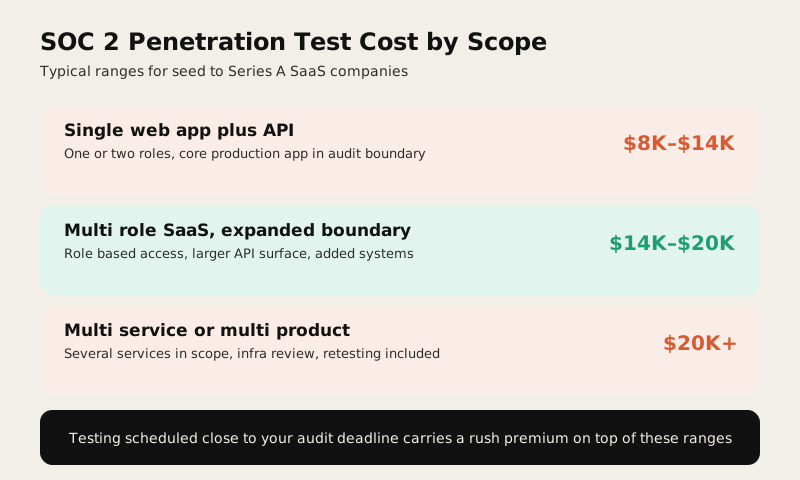
These ranges track closely with what we see for general SaaS penetration testing cost, since the underlying testing work is the same. What SOC 2 adds on top is a timing constraint that a standalone pentest does not have.
Why Audit Timing Moves the Price
A SOC 2 penetration test that is scheduled six or eight weeks before your audit window closes gets normal turnaround and normal pricing. A penetration test requested three weeks before the auditor needs the report gets compressed scoping, expedited scheduling, and often a rush premium on top of the base quote, because the vendor is fitting your engagement into a calendar that was not built around your deadline.
Do You Need a Pentest for SOC 2 Type II Specifically?
Type II audits examine controls over a period of time, typically six or twelve months, rather than a single point in time. That means your penetration test needs to fall inside the observation period and stay current enough that the auditor treats it as representative of your security posture throughout the review, not just on the day it was run. Running the test too early in a twelve month Type II window is a common mistake, since a test from month two may not satisfy an auditor reviewing evidence in month eleven.
Founders preparing for a first Type II audit often ask this earlier than they need to. If you are still deciding whether a pentest is required at all for your specific auditor and control set, that conversation is worth having with your auditor directly before locking in a testing date, since requirements vary slightly by firm.
What Else Drives SOC 2 Pentest Pricing
- Audit boundary size. Every system inside your defined boundary needs coverage. A boundary that quietly grew since your last audit, a new microservice, a customer facing API, an internal admin tool, adds testing hours you may not be budgeting for.
- Evidence expectations. Some auditors accept a standard report. Others want a specific letter of attestation or a report format mapped explicitly to trust services criteria, and vendors unfamiliar with that request will spend extra time producing it.
- Retesting. Auditors increasingly expect evidence that findings were remediated, not just identified. A quote that excludes retesting may look cheaper up front and cost more once the auditor pushes back.
- Manual versus automated depth. NIST SP 800-115 draws a clear distinction between automated scanning and manual penetration testing, and auditors reviewing SOC 2 evidence increasingly know the difference too. A scanner report presented as a pentest is a common reason auditors kick evidence back.
- Timeline pressure. As covered above, testing scheduled close to an audit deadline routinely costs more than the same scope booked with normal lead time.
Trying to figure out where your audit boundary actually falls and what that means for cost? Book a scoping call and we will walk through your systems against your audit timeline before quoting a number.
Red Flags in SOC 2 Pentest Quotes
The riskiest quote in this category is not the most expensive one, it is a low, fast quote from a vendor who does not ask what your auditor expects. A pentest that technically happened but does not map to your trust services criteria, does not cover your full audit boundary, or arrives in a format your auditor rejects means paying twice, once for the test and again for a second one that actually satisfies the audit. Asking a vendor directly how they structure reports for SOC 2 evidence, before signing anything, is the fastest way to avoid that outcome.
How We Approach SOC 2 Pentest Pricing
We scope SOC 2 engagements against your actual audit boundary and your audit calendar together, not as two separate conversations, since a quote that ignores your deadline is not a complete quote. That is part of why our SOC 2 related engagements have landed across the same 8,000 to 30,000 dollar range as our broader SaaS work, the number follows the boundary and the timeline, not a flat per company rate.
FAQ
Does SOC 2 require a penetration test? SOC 2’s trust services criteria do not name a mandatory pentest, but most auditors expect one as evidence of vulnerability management, and most enterprise buyers reviewing your SOC 2 report expect to see it referenced.
How often do you need a pentest for SOC 2? Annually is the common baseline for Type II audits, timed to fall inside your observation period, with additional testing if your audit boundary changes materially between cycles.
Can I use the same pentest for SOC 2 and HIPAA? Sometimes, if the scope and timing align, but the two frameworks weight different controls and evidence expectations, so it is worth confirming with both your SOC 2 auditor and your HIPAA compliance lead before assuming one test covers both.
What happens if my pentest report does not satisfy my auditor? You will likely need a follow up engagement or a revised report before the auditor accepts it as evidence, which is why confirming report format and scope with your vendor up front matters more than the price on the quote.
If your SOC 2 audit window is approaching and you need a number tied to your actual boundary and timeline, book a scoping call, or start with our SaaS penetration testing page for the full breakdown of what is included.
Packet33 is a penetration testing and compliance advisory firm serving SaaS and HealthTech startups in the US, Canada, and UK.

Mohamed is the founder of Packet33. He worked as a cybersecurity analyst before launching the firm and now leads an OSCP-certified team serving SaaS and HealthTech startups in the US, Canada, and UK.