
Vendor details below (team size, funding, engagement model) are accurate as of the publish date. Company figures change, so confirm current details directly with Cobalt or NetSPI before relying on them.
Key Takeaways
- Cobalt and NetSPI are both credible, well funded Pentest as a Service platforms built primarily around enterprise scale and speed, not around early stage startup budgets or a single point of contact.
- Startups searching for a Cobalt or NetSPI alternative are usually looking for the same manual testing quality without a platform layer, a large minimum deal size, or a rotating pool of testers.
- Boutique firms trade platform scale for direct senior access, which tends to matter more at the seed to Series A stage than the credit based scheduling speed a large PTaaS platform offers.
- The right choice depends on whether your priority is fast, platform driven scheduling at enterprise scale or a smaller, senior led engagement built around your specific environment.
Searching for a Cobalt or NetSPI alternative usually means one of two things. Either the quote came back higher than expected for a first pentest, or the engagement felt like it was built for a company much larger than yours. Both are common experiences for early stage SaaS and HealthTech founders evaluating these platforms, and neither means the platforms are bad, it usually means the fit is off.
What Cobalt and NetSPI Actually Are
Cobalt, founded in 2013 and headquartered in San Francisco, pioneered the Pentest as a Service model, connecting companies with a vetted network of over 500 security experts through a credit based platform that can launch an engagement within hours. NetSPI, founded in 2001 and headquartered in Minneapolis, operates a similar PTaaS model at enterprise scale, with a bench described as over 350 security experts and a 2026 merger with Synack aimed at expanding that further. Both companies are well funded and serve well known enterprise customers, and both are built around a platform layer that manages scheduling, tester assignment, and reporting.
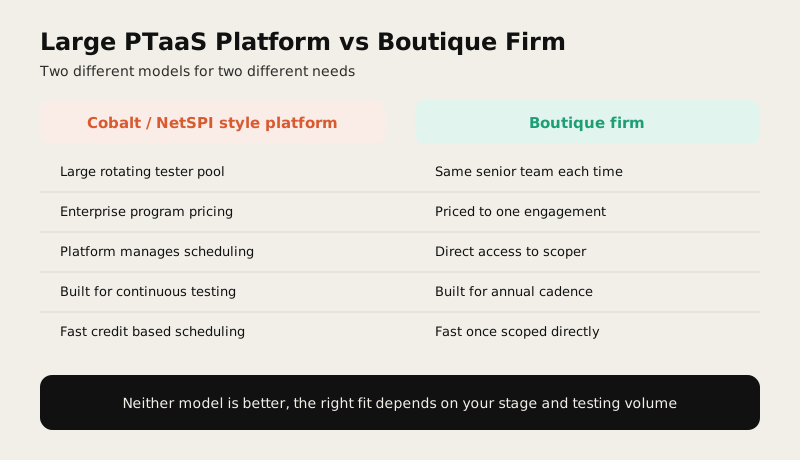
That platform layer is exactly what it sounds like when you read it closely, infrastructure built for continuous, high volume testing across many engagements and often many testers per client relationship. It is a genuinely strong model for companies running dozens of tests a year across a large environment. It is a less natural fit for a startup running its first or second pentest, where the value of a boutique firm’s smaller footprint and consistent point of contact tends to matter more than platform scheduling speed.
Why Startups Look for a Cobalt or NetSPI Alternative
Is Cobalt or NetSPI too expensive or too enterprise focused for an early stage startup? Not necessarily too expensive on paper, but both are built around enterprise engagement sizes and continuous testing programs, which can mean a higher entry point and a platform experience that assumes more testing volume than a first time startup actually needs.
A few specific patterns come up repeatedly when startups look elsewhere:
- Minimum engagement size. Enterprise focused PTaaS platforms are often built around recurring, higher volume testing relationships, which can put the entry price above what a seed stage company needs for a single annual test.
- Tester continuity. A platform pulling from a large pool of independent testers does not always guarantee the same person or small team across engagements, which matters for a startup that wants a vendor who remembers their architecture next year.
- Direct access. Working through a platform layer can mean less direct scoping conversation with the actual testers, compared to a boutique firm where the person scoping the engagement is often the same person managing delivery.
- Report format for a specific compliance need. Startups working toward a first SOC 2 or HIPAA milestone sometimes need a report built around a specific framework’s language, which a smaller firm accustomed to that exact ask can move on faster than a large platform optimized for broad enterprise coverage.
Trying to figure out whether a boutique firm or a larger platform actually fits your stage? Book a scoping call and we will walk through what you actually need before recommending anything.
What a Boutique Alternative Looks Like
The tradeoff runs the other direction too, and it is worth being honest about it. A boutique firm cannot match a large PTaaS platform’s ability to run dozens of simultaneous engagements or offer instant credit based scheduling across a huge tester bench. What it offers instead is a smaller number of senior testers who scope, deliver, and stand behind the engagement directly, continuity from one year to the next without re-explaining your architecture, and pricing built around a single startup sized engagement rather than a recurring enterprise program.
For a SaaS or HealthTech startup running its first, second, or third pentest, that tradeoff usually favors the boutique model. NIST SP 800-115, the federal guide to security testing, does not prescribe a vendor size or model, which is a useful reminder that the right structure depends entirely on what your specific engagement needs, not on which vendor has the largest tester bench.
How Packet33 Fits This Comparison
Packet33 is built specifically around the profile these searches usually describe, a senior led firm where the person scoping the engagement is the same person managing it end to end, with testers holding OSCP, CRTP, and CARTP certifications rather than a large rotating pool. Pricing is scoped to a single SaaS or HealthTech startup’s actual environment rather than an enterprise program minimum.
Start with our SaaS penetration testing page for the full breakdown of what is included.
FAQ
Is a boutique pentest firm as credible as Cobalt or NetSPI for compliance purposes? Yes, for SOC 2, HIPAA, and most enterprise security questionnaires, what matters is an independent, qualified third party test and a report that maps to what the auditor or reviewer expects, not the size of the vendor delivering it.
Do smaller firms take longer to deliver than a PTaaS platform? Not necessarily. Platform scheduling can be faster for booking a slot, but a boutique firm with direct scoping access often moves just as quickly once an engagement starts, since there is no handoff layer between the scoping conversation and the testers doing the work.
Can I switch from Cobalt or NetSPI to a boutique firm mid program? Yes. There is no lock in beyond whatever your current contract term specifies, so switching is straightforward once your testing needs settle into a predictable annual pattern rather than requiring continuous platform based testing.
What should I ask a smaller firm before switching? Ask who specifically will be testing your environment, what certifications they hold, how retesting is priced, and whether the same team will return for your next engagement.
If you are comparing options and want a boutique alternative built around your actual stage and budget, book a scoping call.
Packet33 is a penetration testing and compliance advisory firm serving SaaS and HealthTech startups in the US, Canada, and UK.

Mohamed is the founder of Packet33. He worked as a cybersecurity analyst before launching the firm and now leads an OSCP-certified team serving SaaS and HealthTech startups in the US, Canada, and UK.