
Key Takeaways
- Switching pentest vendors is common and usually low risk, as long as you plan around your audit window, your contract terms, and any open retests.
- The best time to switch is right after a completed engagement, once findings are fixed and retested, not in the middle of one.
- Your history travels with you. Prior reports, scope documents, the findings log, and retest results all help a new vendor start faster and avoid repeating work.
- Most auditors and enterprise buyers care that a qualified, independent party tested your product, not that it was the same firm as last year.
Switching pentest vendors sounds disruptive, but for most SaaS startups it is a routine decision that comes up at renewal time. The quote went up, the last engagement felt rushed, the report did not satisfy a buyer, or the product has changed enough that a different kind of firm makes sense. What matters is doing it in a way that does not leave a gap in your evidence.
Common Reasons Startups Switch
A few patterns come up repeatedly:
- The scope outgrew the vendor. A product that added APIs, a mobile app, or AI features may need testers with different depth.
- The report did not land. An auditor or enterprise buyer asked for changes the vendor could not or would not make.
- Communication was thin. Slow answers, rotating testers, or no clear point of contact during the engagement.
- Pricing changed. A renewal quote that no longer fits your stage.
- Retesting was a hassle. Fixes verified slowly, or charged separately in ways that were not clear up front.
None of these means your previous vendor was bad. It usually means the fit changed. If you want a framework for comparing options before you decide, we cover the questions that separate vendors in our pentest vendor evaluation guide.
When Switching Pentest Vendors Makes Sense, and When to Wait
Timing matters more than the reason. The cleanest moments to switch are:
- After a completed cycle. Findings fixed, retest done, final report in hand.
- Well before your audit window. A new vendor needs lead time to scope, book, and finish before your auditor asks for evidence.
- At contract renewal. Before an auto renewal locks in another term.
Waiting is usually wiser if you are in the middle of an engagement, have open findings awaiting retest, or are within a few weeks of an audit or a customer deadline. A vendor change under time pressure can cost more than staying put for one more cycle.
What to Check Before You Leave
Review these with your current vendor before you give notice:
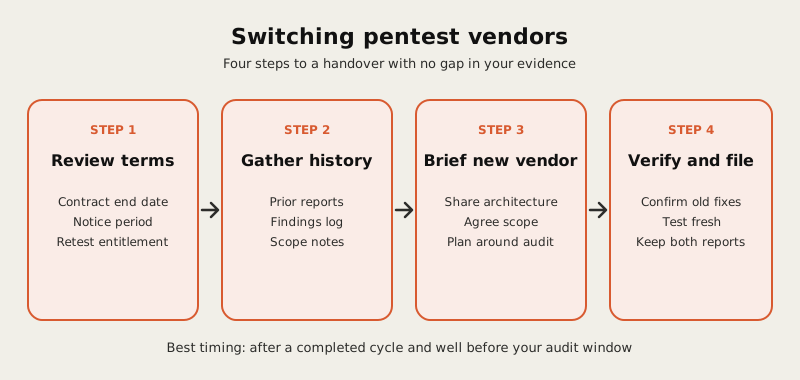
- Contract term and notice period. Know when the agreement ends and how renewal works.
- Retest entitlement. Whether free retesting is still available for the last report, and for how long.
- Report ownership and format. You should have the final report and any attestation letter in hand, along with evidence of remediation.
- Open items. Anything unfinished should be closed or documented before the handover.
Weighing a switch and not sure about timing? Book a scoping call and we will look at your audit calendar and contract dates before suggesting anything.
What to Carry Over to the New Vendor
A good handover saves time and money. Give the new vendor:
- Prior reports. The last one or two reports, so they can see what was tested and found.
- The findings log and retest results. Which issues were fixed, which were accepted as risk, and which remain open.
- Scope history. The assets, roles, and environments covered before, plus anything that changed since.
- Architecture notes. Diagrams, API documentation, and integrations, so scoping is accurate.
Then decide together how to use that history. Some teams ask the new vendor to confirm that previously reported issues stay fixed and then test everything else with fresh eyes. Fresh eyes are one of the real benefits of switching, since a new team may approach the product differently from the last one.
Will Auditors and Buyers Accept a Different Vendor?
In most cases yes. What reviewers typically check is whether an independent, qualified third party tested a defined scope using a recognized method, and whether the report documents findings and remediation. NIST SP 800-115, the federal guide to technical security testing, describes testing as a planned, documented process, and nothing in that framing depends on keeping the same provider. If you are unsure, confirm with your auditor that a change of vendor between cycles is fine, and keep both reports available so the trend is visible.
How We Approach Vendor Transitions
When a startup comes to us from another provider, we start with the previous report and the audit calendar, then scope the engagement around what changed since the last test. We confirm that earlier findings were fixed, test the rest of the product fresh, and deliver a report that stands on its own for an auditor or buyer. If you are comparing us against staying put, the pentest cost and scope questions are covered on our SaaS penetration testing page.
FAQ
Can I switch pentest vendors mid year? Yes, if your contract allows it and you are not in the middle of an active engagement or retest. Check your notice period and any retest entitlement first.
Will switching create a gap in my SOC 2 evidence? Not if you time it well. Make sure the new test lands inside your audit window, and keep the previous report and retest evidence on file.
Should I tell the new vendor what the old one found? Generally yes. Prior findings help with scoping and let the new team confirm fixes. You can still ask them to test the whole product with fresh eyes.
Does switching mean paying for a first time engagement again? It can mean a slightly longer scoping phase, but a new vendor with your prior reports and documentation can usually move quickly. Ask for a quote that reflects what you are handing over.
If you are considering a change and want a plan that protects your audit timeline, book a scoping call.
Packet33 is a penetration testing and compliance advisory firm serving SaaS and HealthTech startups in the US, Canada, and UK.

Mohamed is the founder of Packet33. He worked as a cybersecurity analyst before launching the firm and now leads an OSCP-certified team serving SaaS and HealthTech startups in the US, Canada, and UK.